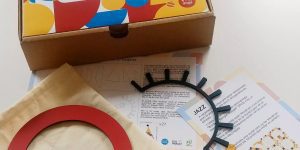
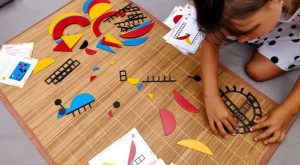
The foundation for this project was being laid a few years ago when Eva Kaluzova designed the typography that stars in this game. Of course, to create the game, one must go from paper to screen and from there to the corporeal wooden pieces, which is not as simple as it might seem. The production of Bautype has presented several technical challenges that we have had to overcome to obtain the game that some have already had the opportunity to see physically.
randomers. is a small but brave creative studio, specializing in graphic design, web design, branding, and communication strategies. Above all, it is a laboratory of ideas that constantly develops internal projects y Bautype is one of them. However, toys, curiously the things for the youngest and that might seem simpler, are surely the biggest challenge for any designer when it comes to integral design. Especially when things are to be done well and with quality. Technical certification for toys is the toughest, and demanding parents do not allow anything that is not well finished and useful into their homes. Therefore, the team at randomers. has had to put in a great effort.
Eva Kaluzova, once the typography was resolved and the accompanying card game was in full development, made several reconfigurations to balance the pieces in number, size, and overall functionality. In another article, we will explain more about the typography itself.
After cutting and painting tests, with various brands on different materials, a plan was drawn up for the creation of a prototype. randomers. has a small and limited multidisciplinary workshop, which is where this work has been carried out.
On a technical level
To create Bautype with pieces that cannot splinter when broken and, therefore, can offer optimal child safety, we decided to use high-compression MDF. The MDF is cut from whole pre-configured sheets with a set of pieces, using a cutting laser that offers the necessary precision. The design of the edges and corners of the geometric shapes is rounded to offer safer shapes, avoiding sharp edges.
Once we have the raw cut pieces, there is a phase of hand sanding in which we remove from the pieces the excess charring produced by the laser cutting on their edges and give a final check to the raw quality. This is how we prepare the surface for the painting process. Then, an adhesive bed must be prepared for each piece, one by one.

The painting of the pieces is the most artisanal and delicate moment of the entire process. In the search for suitable materials, we opted for an ecological paint certified for child use. This is a very hard, single-component enamel. Its technical characteristics mean that it releases practically no organic or synthetic vapors after disposal and drying. (**NOTICE FOR MOMS AND DADS**: Common paints frequently release components into the air even after drying and curing, creating more toxic environments). In our case, the paint can even go into the mouth or be digested without any problem of toxicity migration for humans, even tiny humans 🙂
After proper calibration of the airbrush gun/compressor, the layer painting stage begins. Calibration is something that must be done at intervals to maintain the paint spray cadence and its grain to less than half a micron, in order to offer an optimal and homogeneous result over time. After the first layer, sanding, and inspection, the entire painting and quality control process is done piece by piece. We start with the edges, which are the most delicate and difficult part, and then move on to the first surface layer. Normally, our pieces consist of two complete layers to give consistency to the color and adequate pigmentation. Pigmentation that, in the case of yellow, we discovered was really difficult. Being a color with a very faint white base, it presented orange peel problems in the color and had to be resolved with specific painting/exhaustive review work. We are not going to say how many hours all this has taken, you might be scared.

Through “trial and error” we ended up developing our own manufacturing process and protocols which consists of: placing pieces of equal size, stuck one by one on trays that go to the work table to be painted and from there they are taken to the drying tables. After each layer, each piece is turned over, the burr is inspected, and possible sanding is carried out (this process is repeated for each color layer). Thanks to an action plan that includes drying times for each color, maximum effectiveness in terms of production times has been achieved. It is a very slow and delicate process that requires a good hand both during airbrush painting, during piece handling, and above all... a lot of patience and love (this game is full of that!) 🙂
However, since we are a bit stubborn, now after the Verkami, we will roll up our sleeves again to try to serve the largest number of units before Christmas (or Three Kings Day). Soon we will tell you more about what your contributions will be invested in and how all this seems to be improving and growing the project. Bautype.
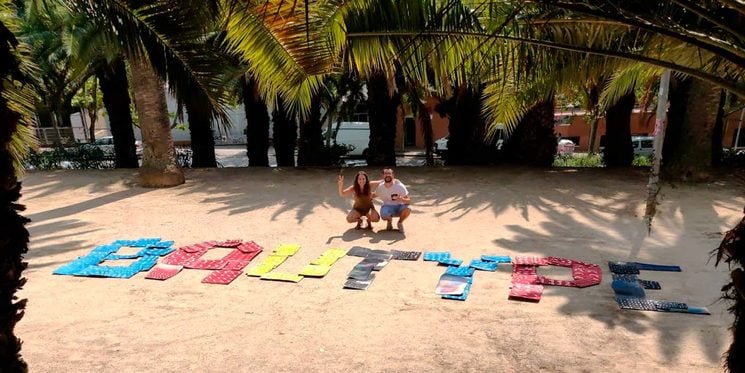
We are randomers. and we make dreams come true, with our own resources, A LOT of work, and love for what we do.